Endovenous Laser Therapy in Hollywood, CA
Are you tired of dealing with the discomfort and unsightly appearance of varicose veins? Discover how Endovenous Laser Therapy can be the solution you’ve been looking for. This minimally invasive procedure is designed to address varicose veins effectively, providing relief from pain and improving your vein health. At the Vein and Wound Center of LA, Dr. Christopher Kim offers state-of-the-art vein treatments tailored to each patient’s unique needs, ensuring the best possible outcomes.
Dr. Kim is a physician with extensive experience in vein disorders, including varicose veins, spider veins, and related conditions. His commitment to patient-centered care and clinical excellence makes the Vein and Wound Center of LA the ideal choice for anyone seeking advanced vein treatments in Los Angeles.
What is Endovenous Laser Therapy?
Endovenous Laser Therapy (EVLT) is an advanced, minimally invasive procedure used to treat varicose veins at their source. It works by delivering targeted laser energy inside the affected vein, causing the vein wall to heat up, collapse, and seal shut.
A small catheter is inserted through a tiny incision, typically near the knee or ankle, and guided through the vein using ultrasound. Once the laser fiber is activated, it treats the full length of the damaged vein. The sealed vein is eventually reabsorbed by the body, while blood is naturally rerouted to healthier veins nearby.
EVLT is typically performed under local anesthesia in an outpatient setting and takes less than an hour.
How EVLT Works (Step-by-Step)
• A numbing solution is placed around the vein
• A catheter is inserted under ultrasound guidance
• A laser fiber is advanced to the highest point of reflux
• Laser energy heats the vein walls as the fiber is withdrawn
• The vein collapses and seals shut
• Blood redirects immediately to healthy veins
• The treated vein is gradually absorbed
The Benefits of Endovenous Laser Therapy
EVLT offers several advantages:
• Minimally invasive: Requires only a small incision
• Effective symptom relief: Reduces heaviness, aching, and swelling
• Quick recovery: Most patients resume routine activity within one to two days
• Local anesthesia: Avoids the risks of general anesthesia
Is Endovenous Laser Therapy Right for You?
EVLT may be appropriate for individuals with:
• Pain or heaviness in the legs
• Swelling in the lower legs or ankles
• Tenderness or burning along visible veins
• Skin discoloration or early stasis changes
• A confirmed diagnosis of axial venous reflux on ultrasound
A consultation determines whether EVLT or another vein treatment is the most suitable option.
Who Is Not a Candidate for EVLT
EVLT may not be recommended for people with:
• Significant peripheral arterial disease
• Skin infection at the access site
• Current pregnancy
• Acute deep vein thrombosis
• Specific bleeding disorders
Other treatment options may be offered depending on vein anatomy and symptoms.
When EVLT Is Recommended
EVLT is commonly recommended when axial venous reflux is identified in:
• The Great Saphenous Vein (GSV)
• The Small Saphenous Vein (SSV)
• Accessory saphenous veins
This approach treats the underlying cause of varicose veins rather than the surface appearance alone.
How EVLT Compares to Other Vein Treatments
EVLT vs. Radiofrequency Ablation (RFA)
Both close refluxing veins using heat delivered through a catheter. The primary difference is the energy source: EVLT uses laser energy, while RFA uses radiofrequency. Clinical outcomes are similar, and the choice may depend on vein diameter, anatomy, and provider preference. With EVLT, laser energy superheats bubbles in blood which in turn damage the vein walls. Radiofrequency catheters directly make contact with vein walls and damage them with their heating element. Dr. Kim will typically use EVLT when the segment needing to be treated is smaller or more precision is needed as he can directly visualize the bubbles on ultrasound in the vein during the procedure. However, radiofrequency ablation is typically more consistent in terms of long term vein closure rates when the vein has a very large diameter or the vein segment being treated is very long.
EVLT vs. VenaSeal™
VenaSeal uses a medical adhesive to close the vein and does not require tumescent anesthesia. It can be an option for patients who prefer adhesive-based closure. EVLT has a long track record with decades of outcome data. Both are effective, and the decision is based on the patient’s anatomy and clinical presentation. Venaseal has more consistent closure rates anecdotally and based on recent evidence. EVLT is an older, established procedure with a very clean side effect profile. In general, when truncal ablation is needed Dr. Kim prefers thermal ablations over nonthermal ablations except for specific situations. Venaseal is useful for very distal GSV or SSV ablations where a thermal ablation may not be safe due to nerve proximity to vein.
EVLT vs. ClariVein® (Mechanochemical)
ClariVein combines mechanical agitation with sclerosant medication and does not use heat. It can be useful for tortuous veins or scenarios where tumescent anesthesia is less desirable. EVLT remains a strong option for a wide range of reflux patterns, and each procedure is selected based on ultrasound findings. Clarivein is almost exclusively used for below knee GSV ablations these days, where endothermal ablations may cause nerve damage as the saphenous nerve runs along the GSV at the lower leg.
Evidence Snapshot
• EVLT demonstrates long-term closure rates above 90% in multiple clinical studies
• Comparable or superior outcomes to surgical stripping in symptom relief and durability
• Faster recovery and lower complication rates than older surgical techniques
• Supported by SVS/AVF/AVLS guidelines as a first-line option for axial reflux
What to Expect After EVLT
• Day 1–2: Mild tightness, pulling, or tenderness
• Week 1: Walking encouraged; normal activity resumed
• Weeks 2–4: The treated vein may feel firm as healing continues
• Months 3–6: Cosmetic improvement becomes more noticeable
The Treatment Process at Vein and Wound Center of LA
Dr. Christopher Kim guides patients through every step:
Consultation: Ultrasound evaluation and personalized treatment plan
Procedure: In-office EVLT typically taking less than an hour
Recovery: Walking immediately afterward, return to routine activities shortly
Follow-up: Post-procedure ultrasound to confirm closure and monitor progress
Why Ultrasound Guidance Matters
Ultrasound guidance helps pinpoint the exact location of refluxing veins and directs each step of the procedure with accuracy. It allows the treatment to be performed safely and precisely. Ultrasound:
• Maps vein anatomy and reflux
• Guides catheter and laser fiber placement
• Helps avoid nerve or arterial injury
• Confirms vein closure after treatment
• Identifies feeder veins that may require additional treatment
What EVLT Cannot Treat
• Spider veins
• Facial or hand veins
• Small reticular veins without axial reflux
• Swelling due to non-venous causes
• Lymphedema
EVLT is targeted specifically at treating refluxing trunk veins.
Long-Term Outlook After EVLT
Most treated veins remain closed permanently. Because vein disease is influenced by genetics, hormonal factors, and occupation, new varicose veins may appear over time. Periodic ultrasound evaluation helps monitor long-term vein health.
Why Choose Vein and Wound Center of LA?
At the Vein and Wound Center of LA, we deliver expert care for vein disorders using advanced, minimally invasive techniques like Endovenous Laser Therapy. Dr. Christopher Kim, our founder, brings extensive surgical training from Harbor-UCLA and the University of Pittsburgh, along with a magna cum laude medical degree from St. George’s University.
He is known not only for his clinical expertise but also for his compassionate, patient-first approach. By developing customized treatment plans tailored to each patient’s needs, Dr. Kim ensures care that is both effective and personal. With state-of-the-art technology and a commitment to excellence, our clinic provides trusted, results-driven care for lasting vein health.
Resources
• Society for Vascular Surgery (SVS), American Venous Forum (AVF), American Vein & Lymphatic Society (AVLS). 2023–2024 Clinical Practice Guidelines for the Management of Varicose Veins.
• Gibson K, Ferris B. Cyanoacrylate closure vs. EVLT randomized trial. J Vasc Surg Venous Lymphat Disord.
• Rasmussen L et al. Randomized trial comparing EVLT, RFA, foam, and surgery. BMJ.
• Almeida JI et al. Five-year EVLT durability outcomes. J Vasc Surg.
• Proebstle TM et al. Endovenous laser ablation long-term follow-up. Dermatol Surg.
Frequently Asked Questions
Is EVLT painful?
Most patients feel pressure rather than pain during the procedure. Local anesthesia helps prevent discomfort.
How long does the treated vein stay closed?
Studies show closure rates above 90% at 3–5 years, with low recurrence.
Do I need to wear compression stockings afterward?
Compression is often recommended temporarily to reduce bruising and discomfort.
Will EVLT remove my bulging veins?
EVLT treats the underlying reflux. Surface veins may require microphlebectomy or sclerotherapy.
Can both legs be treated on the same day?
Yes, depending on your specific treatment plan.
When can I return to exercise?
Walking is encouraged immediately. High-impact activities may be delayed briefly.
Is EVLT covered by insurance?
Most insurance plans cover EVLT when axial reflux and medical symptoms are documented.
What happens if I don’t treat venous reflux?
Reflux can progress, leading to worsening swelling, pain, and skin changes over time.
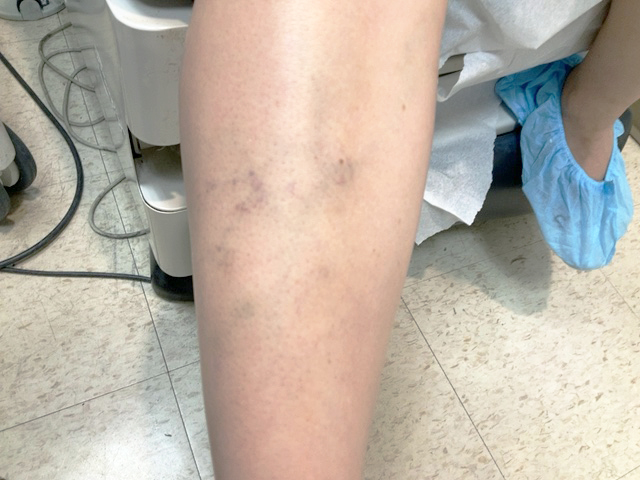
Before
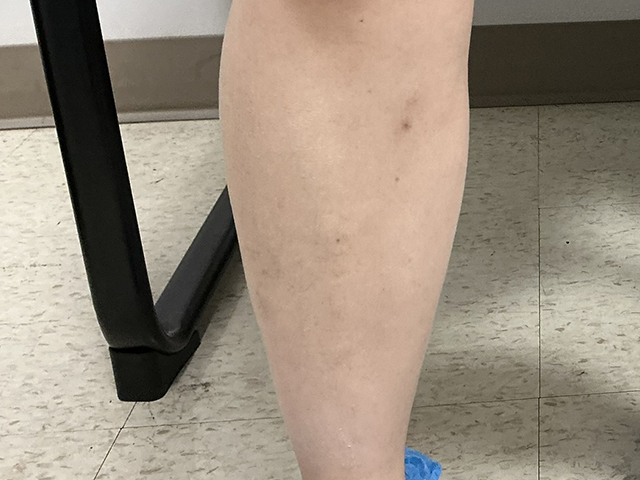
After
Find Relief from Vein Pain and Swelling in Los Angeles, CA
Don’t let varicose veins affect your life any longer. Contact the Vein and Wound Center of LA today at (213) 654-8346 to schedule a consultation with Dr. Christopher Kim. Take the first step towards healthier, more comfortable legs with Endovenous Laser Therapy.